


If there’s one trap in the IELTS Reading test that almost every student falls into, it’s the “most” trap. On the surface, it looks harmless — just a little word like most, only, always, or never. But in reality, this tiny word has the power to wreck your answer.
Let’s break it down.
What the trap looks like
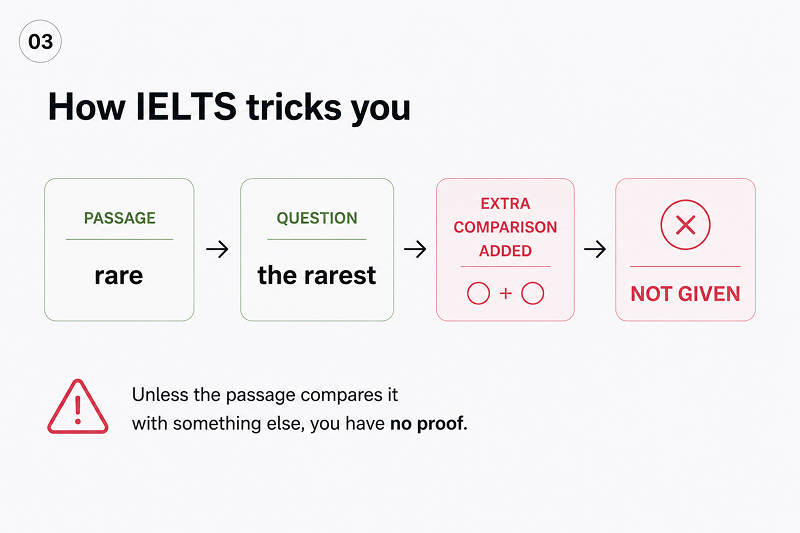
Imagine you’re reading about a tree, a stone, an animal, or a city. The passage describes it as tall, thick, rare, or expensive. Simple enough.
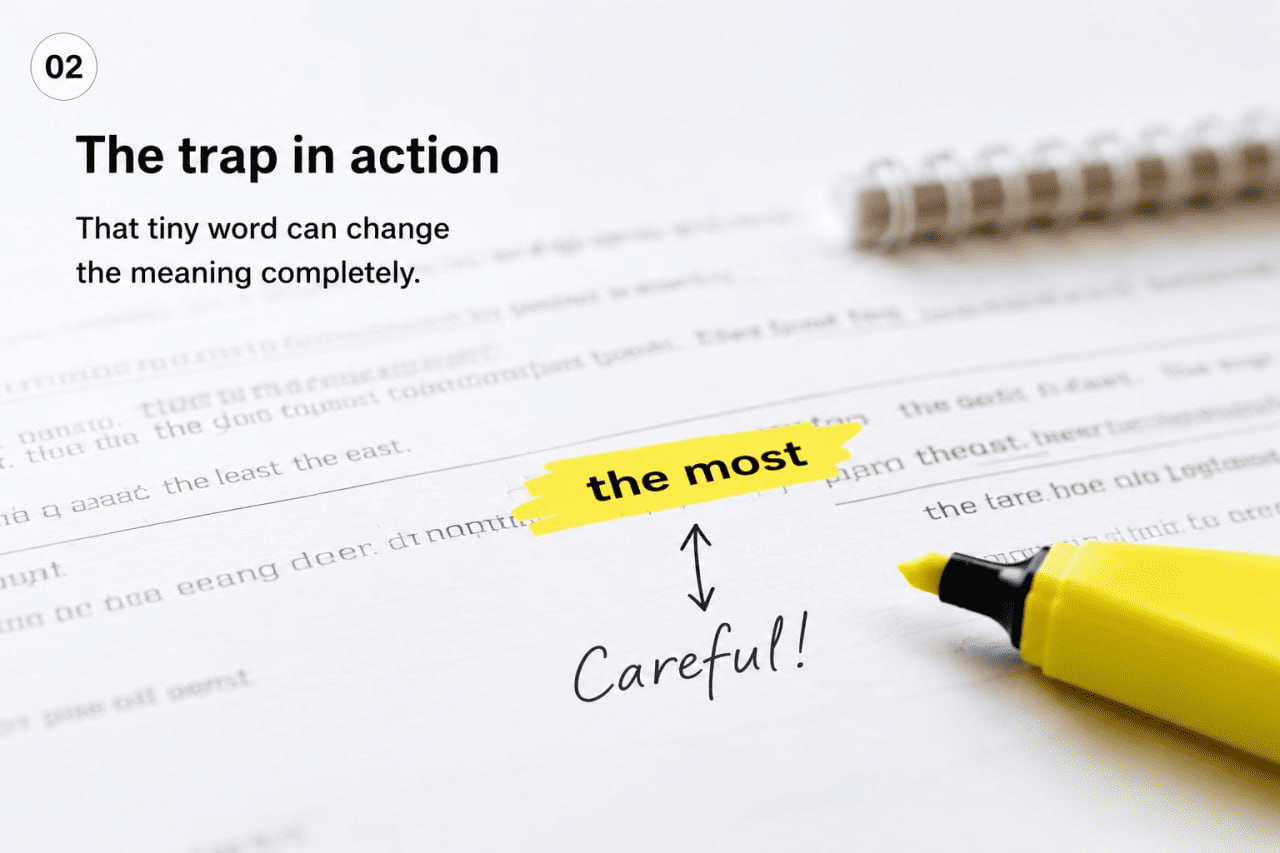
But then, in the statement, the wording quietly shifts: the tallest, the thickest, the rarest, the most expensive, the only… Suddenly, we’re in dangerous territory.
Why? Because unless the text actually compares it to other things, you have no proof that it’s the most or the only. And in IELTS, no proof means one thing: NOT GIVEN.
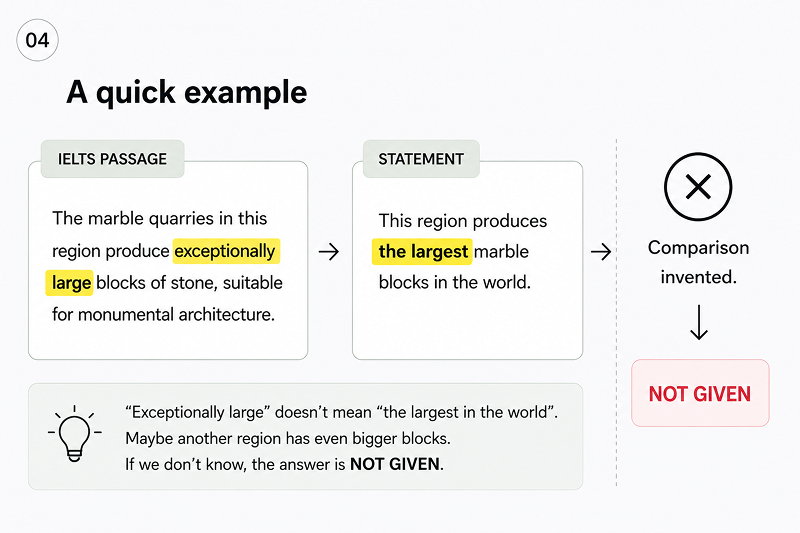
A quick example
Text:
The marble quarries in this region produce exceptionally large blocks of stone, suitable for monumental architecture.
Statement:
This region produces the largest marble blocks in the world.
Tempting, right? “Exceptionally large” sounds almost the same as “the largest.” But here’s the catch: the text never says in the world. Maybe another region makes even bigger blocks. We don’t know — and if we don’t know, the answer cannot be True or False. It’s NOT GIVEN.
Red-flag words to watch for
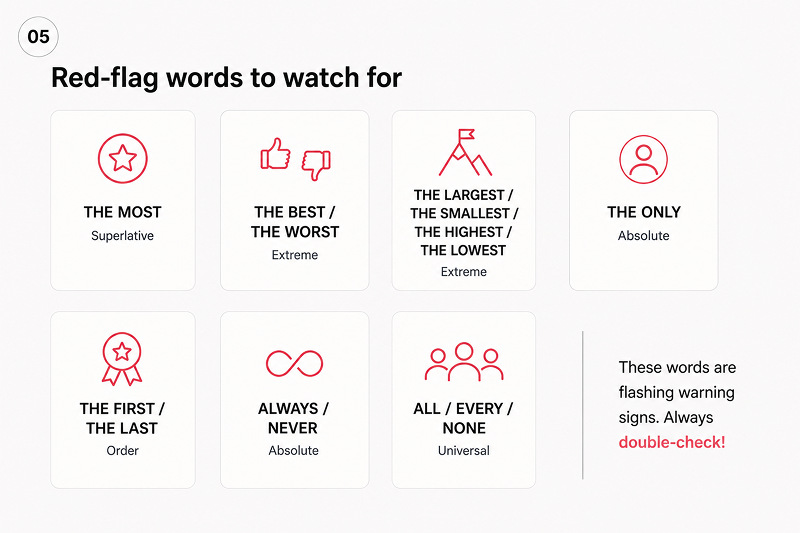
Whenever you see these words in the statement, stop and double-check:
- the most (expensive, common, popular…)
- the best / the worst
- the largest / the smallest / the highest / the lowest
- the only
- the first / the last
- always / never
- all / every / none
They’re like flashing warning signs telling you: “Careful! This might be a trap.”
How to beat the trap
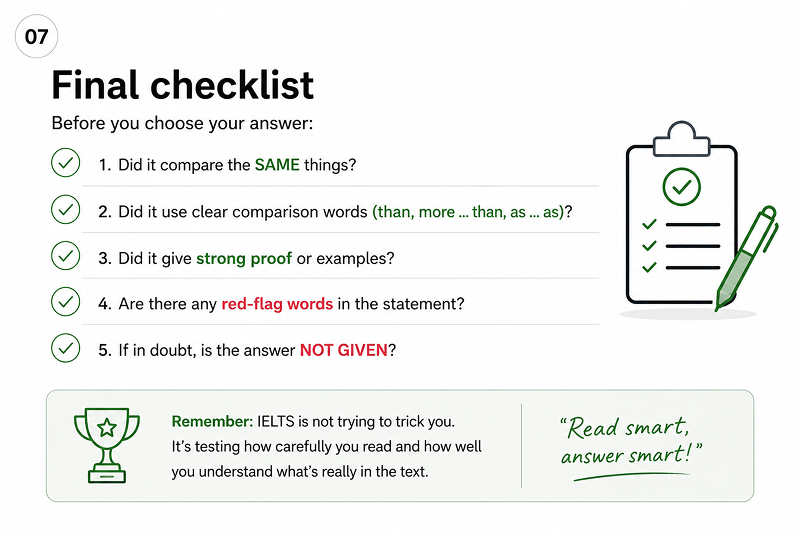
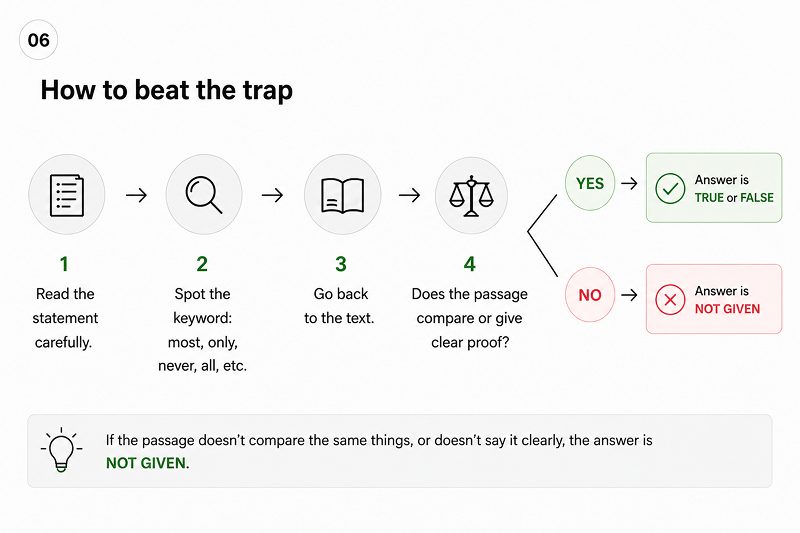
- Spot the keyword. Notice if the statement uses most, only, never, all, etc.
- Go back to the text. Ask:
- Did the passage actually compare this with something else?
- Did it give clear proof that it’s the most, the only, always, or never?
If the text doesn’t prove it, then the answer is almost always NOT GIVEN.
Another classic example
Text:
In the mountains of northern Italy, a rare type of cheese is aged in natural caves. The stable temperature and humidity of these caves give the cheese its distinctive flavor and texture.
Statement:
This cheese is the rarest in the world.
See the difference? The passage only says the cheese is rare. It doesn’t say it’s the rarest in the world. That comparison is missing — so again, the answer is NOT GIVEN.
The bottom line
IELTS loves to test how disciplined you are as a reader. Your job is simple: stick to the facts that are on the page. Don’t add extra logic, don’t assume, don’t “upgrade” rare to rarest. If the text doesn’t say it, you don’t say it either.
Master this one trap, and you’ll instantly avoid a ton of silly mistakes that cost students valuable marks. This is just one of the things we work on in my IELTS Reading course, together with lots of guided practice.